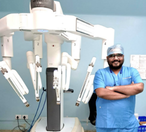
Scarless Oral Cancer Surgery – Removing the Tumour Without Leaving a Mark on Your Face
Scarless Oral Cancer Surgery – Removing the Tumour Without Leaving a Mark on Your Face Cancer surgery has always come with a trade-off. You get the cure but you carry the scar. For oral cancer patients, that scar has traditionally sat in one of the most visible places imaginable the face, the jaw, or the neck. Today, that trade-off is no longer inevitable for every patient. Scarless oral cancer surgery is changing what is possible, and it is happening right now at specialist centres equipped with the right technology and the right expertise. When Oral Cancer Surgery Leaves More Than Just a Cure Behind? A scar on the face is not just a cosmetic concern. It is a daily, visible reminder of cancer seen by others, felt by the patient, and carried into every social interaction. Patients report reduced confidence, changes in how they present themselves professionally, and a persistent self-consciousness that continues long after the cancer is gone. For oral cancer specifically, conventional surgery often requires external incisions on the cheek, jaw, or neck to give the surgeon enough access to remove the tumour with clear margins. The result is effective. But it leaves a mark that no amount of careful closure fully eliminates. Scarless oral cancer surgery was developed to preserve the outcome while protecting the face. What Scarless Oral Cancer Surgery Actually Means? Scarless does not mean the body is never cut. It means all incisions are placed where they cannot be seen inside the mouth, or through the natural folds of the body so the patient’s face and neck remain untouched on the outside. The key distinction to understand is between minimally invasive surgery which makes smaller cuts in the same visible locations and truly scarless surgery, which relocates the access point entirely. These are not the same thing. Only the second approach eliminates the visible scar. The Technology That Makes It Possible – Robotic Surgery Scarless oral cancer surgery is only possible because of robotic surgery. Conventional instruments cannot operate with sufficient precision through the narrow, indirect access routes that scarless approaches require. The robotic surgical platform gives the oral cancer surgeon a magnified three-dimensional view inside the mouth and throat, with robotic arms that have a far greater range of movement than the human wrist. The surgeon controls these arms from a console translating hand movements into precise, scaled actions at the instrument tip. This level of control makes it possible to remove a tumour completely through the mouth, with clear margins, without a single external incision. How Scarless Oral Cancer Surgery Is Performed? The Transoral Robotic Approach – Through the Mouth In transoral robotic surgery known as TORS robotic instruments and a camera are introduced through the mouth. The surgeon navigates to the tumour, removes it with clear margins, and completes the procedure entirely from the inside. There is no cut on the face, no cut on the jaw, and no external wound to heal. This approach is particularly well suited to cancers of the oropharynx the base of the tongue, the tonsils, and the back wall of the throat where conventional access would otherwise require significant external incisions. Neck Dissection – Can That Be Done Without a Visible Scar Too In cases where lymph node removal from the neck is required alongside oral cancer surgery, this can also be performed through hidden access points using robotic or endoscopic techniques through the hairline or natural skin folds. The result is a complete oncological procedure with no visible evidence on the neck or face. Who Is a Candidate for Scarless Oral Cancer Surgery? Scarless surgery is not appropriate for every oral cancer patient. The following factors determine eligibility: Tumour location – Cancers accessible through the mouth are the strongest candidates; tumours that have grown into the jaw or deeply into facial structures may require open surgery Tumour size and stage – Smaller, earlier-stage tumours are typically better suited to the transoral robotic approach Absence of prior treatment changes – Previous radiation or surgery in the area can alter anatomy and affect suitability When conventional open oral cancer surgery is the safer and more complete option, an experienced oral cancer surgeon will always recommend it. The goal is always complete tumour removal with clear margins. The approach serves that goal never the other way around. Recovery After Scarless Oral Cancer Surgery Recovery after transoral robotic surgery differs from open surgery in several important ways. Because no external incisions are made, there is no facial or neck wound to heal, no external dressings to manage, and no visible scar to monitor. Patients typically experience less post-operative pain than with open surgery, a shorter hospital stay often one to two days and a faster return to eating, speaking, and daily activity. Speech and swallowing function are carefully monitored by a specialist team and, in most cases, recover well following the transoral approach. What to Ask Your Oral Cancer Surgeon? Before agreeing to any surgical plan, these are the questions every oral cancer patient should ask: Am I a candidate for scarless surgery based on my specific tumour? How many transoral robotic procedures have you personally performed? What are your complication and margin clearance rates for this approach? If scarless surgery is not right for me why, and what are my options? An oral cancer surgeon who answers these questions directly and honestly including when they would recommend open surgery instead is one whose judgement you can trust. Get Treated. Get Better. Move On Without a Scar. Scarless oral cancer surgery does not compromise the cure. It protects the patient’s face, shortens recovery, and removes one of the most psychologically difficult aspects of oral cancer treatment the visible, permanent reminder that cancer was ever there. For patients who are candidates, it is one of the most meaningful advances in oral cancer care of the last decade. The conversation with your surgeon starts with one question: is this possible for me?