CASE REPORT
Total Thyroidectomy for Locally Advanced Papillary Thyroid Carcinoma
Complete resection of a massive, retrosternally extending papillary thyroid carcinoma with carotid sheath involvement, achieved without median sternotomy and with preservation of postoperative voice.
Patient Age
40 Years
Papillary
Thyroid carcinoma
Resection achieved
R0
Surgical Approach
No sternotomy
Clinical history
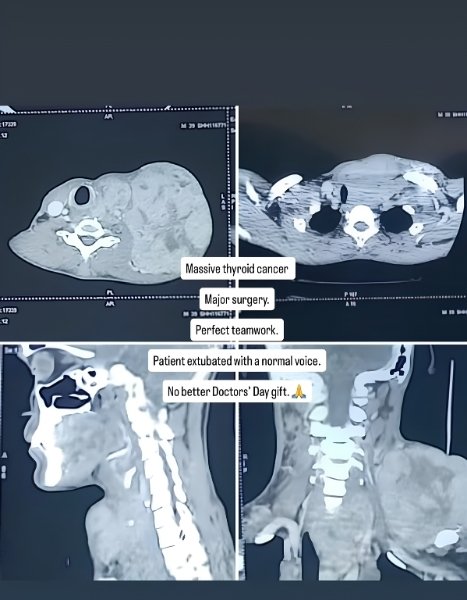
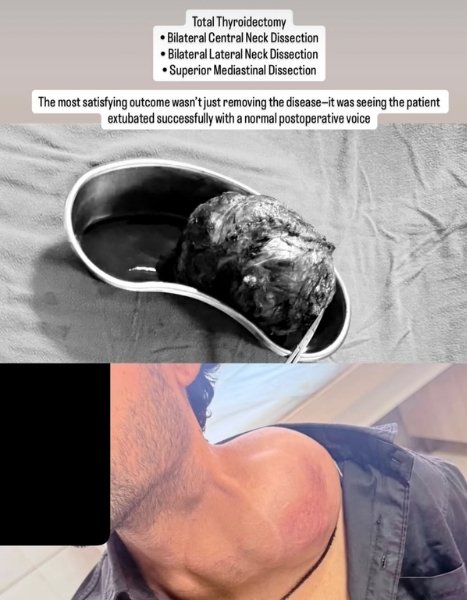
A 40-year-old male presented with locally advanced papillary thyroid carcinoma characterized by massive cervical disease, extension into the retrosternal (upper mediastinal) region, involvement of the carotid sheath, and extensive nodal metastases. He also had pre-existing ipsilateral vocal cord palsy resulting from vagus nerve involvement by tumor. Although Radioactive Iodine (RAI) therapy is a standard treatment for thyroid carcinoma, RAI is not effective against bulky gross disease of this extent. Surgery was therefore pursued with the goals of achieving an R0 resection (complete removal with microscopically clear margins), relieving impending airway compromise, removing all macroscopic disease, and creating optimal conditions for postoperative RAI to address any microscopic residual disease and distant metastases.
Surgical Course
Given the ineffectiveness of RAI against bulky disease, total thyroidectomy with bilateral central and lateral neck dissection and superior mediastinal dissection was planned to achieve complete oncologic clearance.
Early control of the lower internal jugular vein was obtained close to the brachiocephalic vein before mobilizing the specimen, minimizing the risk of a catastrophic venous tear. The common carotid artery was circumferentially dissected with careful preservation of arterial integrity despite dense tumor adherence, and the external carotid artery was ligated to facilitate safe oncologic clearance.
The vagus and recurrent laryngeal nerves on the involved side were sacrificed, as both were completely encased by tumor and the patient already had preoperative vocal cord palsy on that side. The contralateral recurrent laryngeal nerve was meticulously preserved to protect postoperative voice.
Although disease extended into the superior mediastinum, meticulous cervical mobilization showed the inferior extent remained accessible through the neck, allowing complete removal without median sternotomy and reducing surgical morbidity while maintaining oncologic principles.
Outcome
The patient was extubated safely with a normal postoperative voice; complete gross resection was achieved, setting the stage for postoperative radioactive iodine therapy to address any residual microscopic disease.