Beyond the Surgery:
Reclaiming Speech, Breath, and Identity After Laryngectomy
There is a moment after laryngectomy when everything feels unfamiliar. The way you breathe has changed. The voice you have carried your entire life is gone at least in its original form. And the person looking back at you in the mirror feels, for a while, like a stranger. This is not weakness. It is the honest reality of what laryngectomy asks of a person. But it is also not the end of the story. Thousands of patients have walked through that disorientation and come out the other side speaking, laughing, working, and living fully.
The Moment Everything Changes - What Laryngectomy Actually Does to the Body
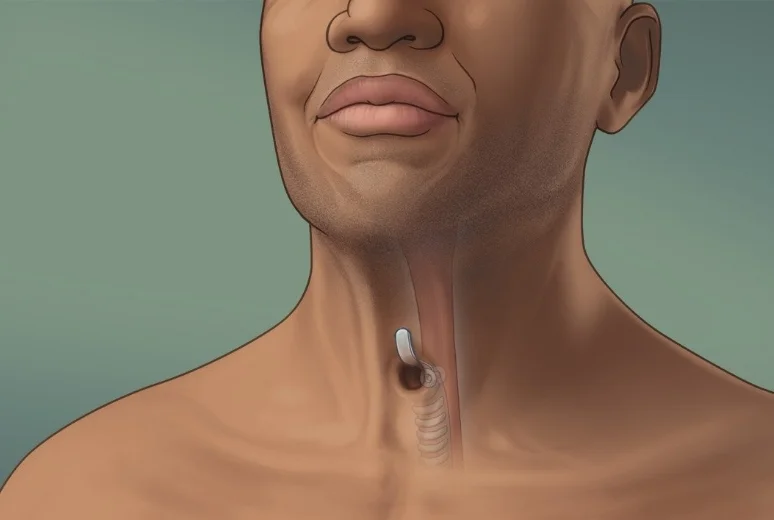
The larynx commonly called the voice box sits at the top of the windpipe and serves two critical functions: it produces voice, and it protects the airway during swallowing. When larynx cancer requires its complete removal, the surgeon permanently separates the windpipe from the mouth and food pipe. Breathing now happens through a stoma a small opening created in the front of the neck.
What Is Permanently Changed and What Can Be Rebuilt?
The separation of the airway from the mouth is permanent. But the ability to communicate to make yourself heard and understood is not lost. It takes a different form, learned with time and support. This distinction is the foundation of larynx cancer rehabilitation: acknowledging what has changed while actively rebuilding everything that can be.
Breathing After Laryngectomy - The New Normal Nobody Talks About
Laryngectomy focus heavily on speech. Far fewer address what it means to breathe differently for the rest of your life and yet for most patients, adjusting to stoma breathing is one of the most immediate challenges of life after laryngectomy.
Living With a Stoma: Daily Care and What to Expect
The stoma requires regular cleaning and care to prevent blockages and infection. Heat and moisture exchangers small filters worn over the stoma help warm and humidify the air before it reaches the lungs, replicating some of what the nose and throat previously did. Swimming and activities that risk water entering the stoma require specific precautions. These adjustments become routine over time, but patients benefit enormously from being prepared for them before they leave hospital.
How the Body Adapts Over Time?
The body is remarkably adaptable. Within weeks to months, most patients find that stoma care becomes second nature no longer a medical task but simply part of the morning routine, like any other act of personal care.
Finding Your Voice Again - Three Paths Back to Speech
Voice after throat cancer surgery does not return on its own it is rebuilt through one of three established methods, each with its own advantages, and each suited to different patients depending on their anatomy, lifestyle, and personal preference.
Voice Prosthesis (TEP): The Most Common Speaking Device After Laryngectomy
A tracheo-oesophageal puncture, or TEP, involves placing a small one-way valve between the windpipe and the food pipe. When the patient covers the stoma with a finger or a hands-free valve and exhales, air is redirected through the voice prosthesis and into the food pipe, where it vibrates to produce sound. The result is a voice that while different from before is fluent, conversational, and surprisingly natural. The TEP is currently the most widely used speaking device after laryngectomy and produces the most voice-like speech of the three options.
Oesophageal Speech: Learning to Speak Without Any Device
Oesophageal speech involves swallowing or injecting small amounts of air into the food pipe and then releasing it in a controlled way to produce sound. It requires no device and no surgery beyond the original laryngectomy just consistent practice with a speech therapist. The voice it produces is lower and more effortful than TEP speech, but for patients who are not candidates for a prosthesis, it offers genuine independence and freedom.
Electrolarynx: The Electronic Voice Option
An electrolarynx is a small handheld device roughly the size of an electric razor that generates vibration when held against the neck or cheek. The patient mouths words normally, and the device provides the sound source that the larynx previously supplied. It is the easiest method to begin using immediately after surgery and is often the first form of communication patients use while still in hospital, before longer-term speech methods are established.
Larynx Cancer Rehabilitation - It Goes Far Beyond Learning to Speak
True rehabilitation after laryngectomy addresses the whole person not just the mechanics of producing sound.
Swallowing, Eating, and Nutrition After Surgery
Because the airway is now permanently separated from the food pipe, swallowing is actually safer after total laryngectomy than before there is no longer a risk of food entering the airway. However, surgery can still affect the muscles involved in swallowing, and a speech and swallowing therapist works with patients to restore comfortable, efficient eating as part of the broader rehabilitation process.
The Emotional and Psychological Side of Recovery
The identity shift that laryngectomy brings is real and should not be minimised. Many patients describe a period of grief for the voice they had, for the ease of communication they took for granted, for the version of themselves that existed before surgery. This is a normal and valid response. Psychological support, peer groups, and connection with other laryngectomees are all recognised parts of larynx cancer rehabilitation that make a measurable difference to long-term wellbeing.
Returning to Work, Social Life, and Relationships
Most patients do return to work, to social situations, and to the relationships that matter to them. The timeline varies some return within months, others take longer. What consistently helps is early, honest communication with employers, family, and friends about what has changed and what has not.
What the Recovery Timeline Actually Looks Like?
The First Two Weeks: Hospital, Healing, and First Communication
The immediate post-operative period is focused on healing, stoma care, and establishing the first method of communication usually writing or an electrolarynx. Nutrition is provided through a nasogastric tube initially, with oral feeding reintroduced as swallowing is assessed.
Months One to Three: Speech Therapy and Finding Your Method
This is the most active phase of speech rehabilitation. Regular sessions with a speech and language therapist guide the patient toward their chosen communication method. TEP voice begins to develop. Oesophageal speech practice starts. Confidence builds gradually with each session.
Six Months and Beyond: Adjusting, Improving, Living
By six months, most patients have found their primary method of communication and are using it in daily life. The voice continues to improve with practice for up to two years post-surgery. Life after laryngectomy at this stage looks, for most patients, recognisably like life adapted, but full.
Choosing the Right Speaking Device After Laryngectomy
There is no single right answer. The best speaking device after laryngectomy is the one that fits the patient’s anatomy, health, lifestyle, and personal priorities.
The Role of Your Speech and Language Therapist
This decision should never be made alone. A specialist speech and language therapist evaluates each patient individually assessing surgical outcomes, muscle function, and personal goals before recommending a method. In experienced centres managing voice after throat cancer surgery, this conversation begins before the operation itself, so patients enter recovery with realistic expectations and a clear plan.
Questions Patients and Families Ask Most
Will My Voice Ever Sound the Same Again?
Not in the same way but it can sound like you. Many TEP users develop a voice that is immediately recognisable to people who know them. The pitch and quality are different, but the rhythm, the accent, the personality those come through.
What the Recovery Timeline Actually Looks Like?
Yes. Over time, patients learn to modulate their new voice in ways that carry warmth, humour, and emotion. It takes practice but it happens.
Life After Laryngectomy Is Different - But It Is Still Life
Reclaiming speech, breath, and identity after laryngectomy is not a straight line. It is a process sometimes frustrating, sometimes surprising, and ultimately, for most patients, deeply affirming of what the human body and spirit are capable of. The surgery removes the larynx. It does not remove the person.
If you or someone you love is preparing for or recovering from laryngectomy and would like guidance on rehabilitation and communication options, speaking with a specialist head and neck oncology team is the most important first step toward finding your way forward.