
How Smoking Can Increase Risk of Head and Neck Cancer?
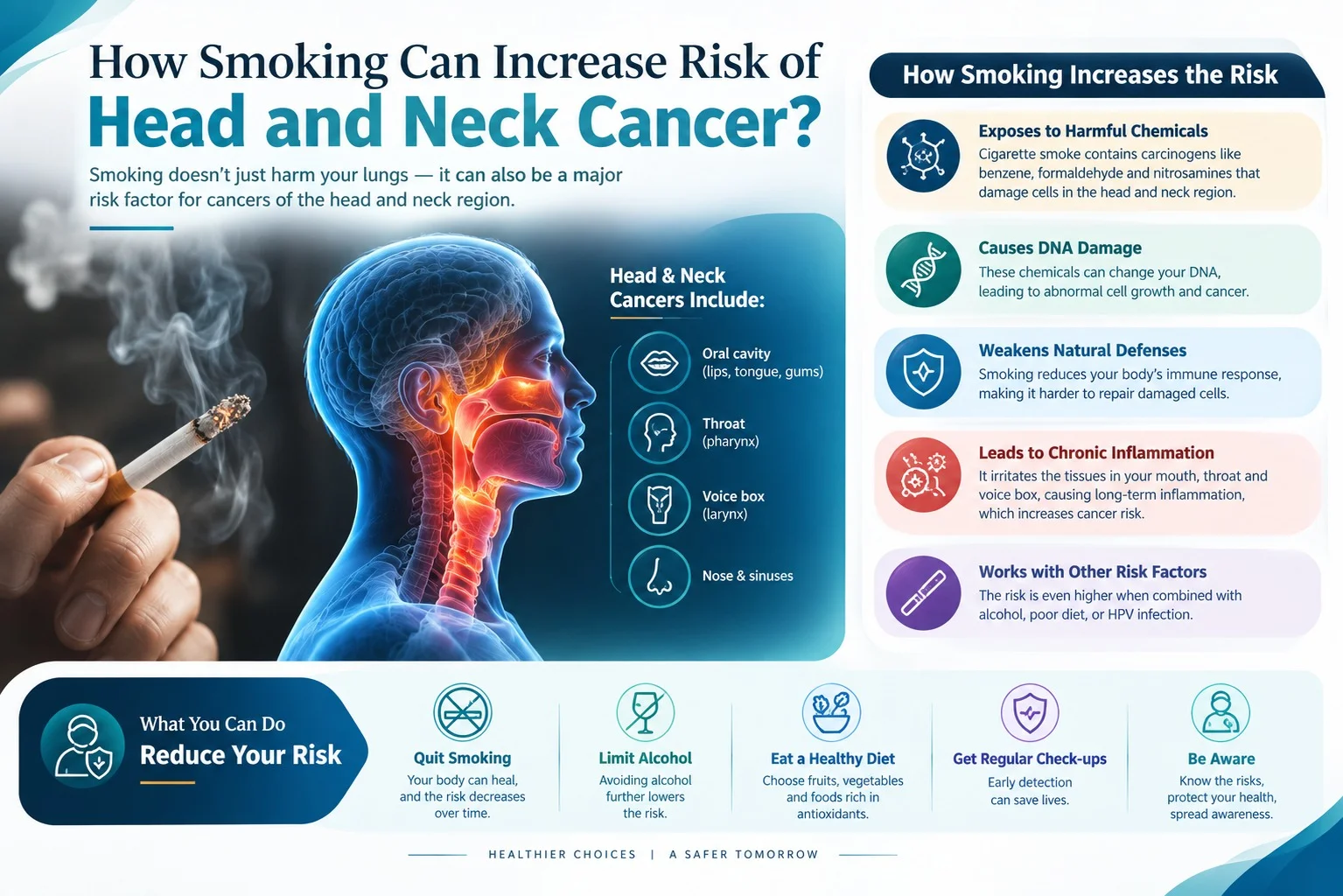
Smoking is widely recognized as a major risk factor for lung disease, but its effects can extend far beyond the lungs. Regular tobacco use can increase the risk of cancers affecting the mouth, throat, voice box, and other parts of the head and neck. The risk also tends to increase with the amount and duration of tobacco exposure.
Understanding this connection is important because some early symptoms may look like ordinary mouth or throat problems. Recognizing the risks and paying attention to persistent changes can encourage timely medical evaluation.
How Does Smoking Affect the Head and Neck?
Tobacco smoke contains numerous chemicals that can damage cells. With repeated exposure, these substances can cause changes in the tissues lining the mouth, throat, and voice box. Over time, such cellular damage can contribute to the development of cancer.
The risk is not limited to cigarettes. Cigars, pipes, and smokeless tobacco are also associated with cancers of the oral cavity, oropharynx, hypopharynx, and larynx.
Which Cancers Are Linked to Smoking?
Smoking is strongly associated with cancers affecting the oral cavity, throat, hypopharynx, and larynx. The exact risk can vary depending on the area involved and the amount of tobacco exposure.
This is why changes such as a persistent mouth ulcer, unexplained neck lump, ongoing hoarseness, or difficulty swallowing should not simply be dismissed as irritation from smoking. These symptoms can have many other causes, but persistent changes deserve appropriate evaluation.
Does Alcohol Increase the Risk Further?
Smoking is an important risk factor on its own, but combining tobacco with alcohol can increase the risk of several head and neck cancers even further. Research has consistently found higher risks among people who use both compared with those who use either tobacco or alcohol alone.
Reducing tobacco and alcohol exposure is therefore an important part of lowering preventable cancer risk.
What About Tobacco Chewing and Other Products?
For Indian families, it is important to understand that the risk is not limited to smoking. Chewing tobacco, gutka, and betel-quid products are also associated with oral and oropharyngeal cancers. Areca nut, which is commonly used in betel quid, is itself a carcinogenic substance.
Switching from cigarettes to another tobacco product should therefore not be considered a risk-free alternative.
What Symptoms Should Smokers Never Ignore?
A smoker should seek medical advice if any of the following symptoms persist:
- A mouth ulcer that does not heal
- White or red patches inside the mouth
- A lump or swelling in the neck
- Persistent sore throat
- Difficulty swallowing
- Ongoing hoarseness or voice changes
- Unexplained bleeding
- Persistent ear pain without an obvious ear problem
These symptoms do not automatically mean cancer. However, symptoms that continue for several weeks should be assessed rather than repeatedly treated at home.
When Should You Consult a Head and Neck Cancer Doctor?
A head and neck cancer doctor can examine persistent symptoms and determine whether further investigation is necessary. Depending on the findings, evaluation may involve a physical examination, imaging, or a biopsy.
Early assessment can also help distinguish cancer from less serious conditions. The aim is not to assume the worst, but to identify the actual cause of a persistent problem without unnecessary delay.
What Happens If Cancer Is Diagnosed?
Treatment depends on the type, location, and stage of the cancer. Depending on the individual case, treatment may include surgery, radiation therapy, chemotherapy, immunotherapy, targeted therapy, or a combination of these approaches.
When surgery is appropriate, a head and neck cancer surgeon may remove the tumor while aiming to preserve important functions such as speech, swallowing, and breathing whenever possible. Surgical planning is based on the location and extent of the disease.
A surgical oncologist may also be involved in planning cancer surgery and coordinating treatment with other specialists when a multidisciplinary approach is needed.
Dr. Bhavin Vadodariya provides evaluation and treatment planning for patients with concerns related to head and neck cancers, with treatment decisions based on the individual’s diagnosis and clinical findings.
Can Quitting Smoking Reduce the Risk?
Quitting smoking is an important step toward reducing future cancer risk. The National Cancer Institute reports that the risk of cancers of the oral cavity, oropharynx, hypopharynx, and larynx decreases after smoking cessation, with substantial reductions occurring over time.
Quitting can also remain important after a cancer diagnosis because continued tobacco use can affect cancer outcomes and increase the risk of developing another primary cancer.
The Importance of Acting Early
Smoking does not mean that a person will definitely develop head and neck cancer, but it is a significant and preventable risk factor. Avoiding tobacco, reducing other known risks, and paying attention to persistent symptoms can help protect long-term health.
When an unusual change in the mouth, throat, or neck does not go away, timely medical evaluation is better than waiting for symptoms to become severe.