
What Are the First Signs You Might Have Oral Cancer?
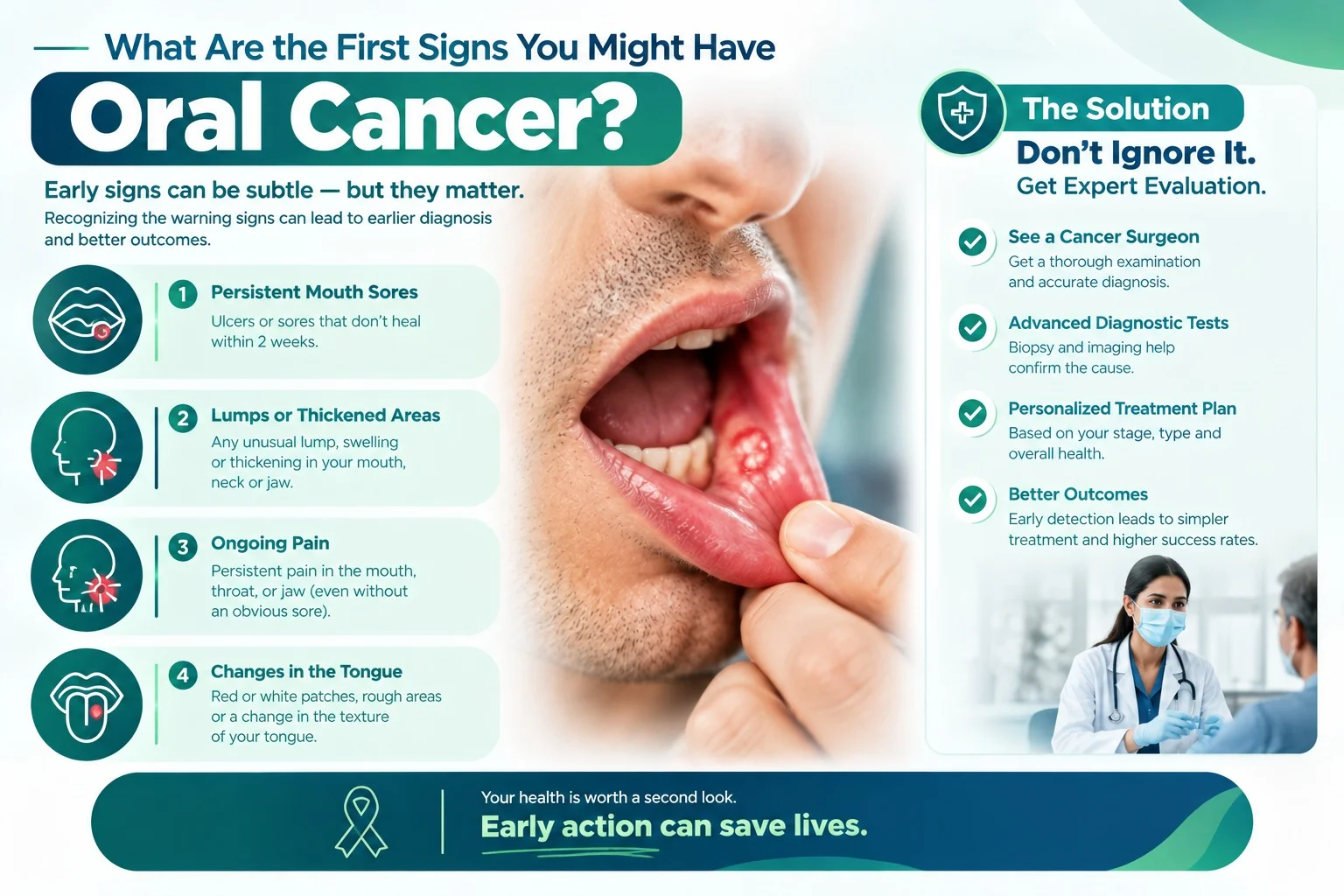
Oral cancer can develop in the lips, tongue, gums, inner cheeks, floor of the mouth, and other parts of the oral cavity. In its early stages, the changes may seem minor and can sometimes be mistaken for a routine mouth ulcer, irritation, or dental problem. Recognizing unusual symptoms early is important because timely evaluation can help identify the cause and, when necessary, allow treatment to begin sooner.
It is also important to remember that having one of these symptoms does not automatically mean you have cancer. Many of them can occur because of infections, injuries, dental problems, or other less serious conditions. The key is to pay attention when a change persists or becomes worse.
Why Early Changes in the Mouth Should Not Be Ignored
The mouth is an area where many unusual changes can be seen or felt. However, people often delay getting them checked because there is little or no pain initially.
A persistent change deserves professional assessment, particularly when it does not improve after a reasonable period. A doctor or dentist can examine the area and decide whether further tests are needed.
7 Early Signs That May Need Medical Attention
1. A Mouth Ulcer That Does Not Heal
Occasional mouth ulcers are common, but a sore on the lip or inside the mouth that does not heal should be examined. Persistent sores are among the recognized warning signs of oral cancer.
2. A Lump or Thickened Area
A new lump, thickening, or unusual growth on the lip, gums, tongue, or inside of the cheek should not be ignored. It may have a harmless explanation, but persistent changes require assessment.
3. White or Red Patches
White or red patches on the tongue, gums, or lining of the mouth can have several causes. Some may represent precancerous changes, while others are harmless. A persistent patch should therefore be examined rather than treated based on assumptions.
4. Unexplained Bleeding, Pain, or Numbness
Unusual bleeding, ongoing mouth pain, or numbness involving the lip, tongue, or other areas of the mouth can require further investigation, particularly when there is no obvious cause.
5. Difficulty Chewing or Swallowing
Changes in your ability to chew food, swallow comfortably, or move your tongue or jaw may indicate a problem that needs evaluation.
6. Loose Teeth or Poorly Fitting Dentures
Teeth that become loose without a clear dental explanation, or dentures that suddenly become uncomfortable or fit differently, can sometimes be associated with changes in the jaw or surrounding tissues.
7. Persistent Throat or Voice Changes
A continuing sore throat, the sensation of something being stuck, or an unexplained change in voice should also be assessed, particularly when the problem does not settle.
When Should You Consult a Cancer Doctor?
A cancer doctor can evaluate persistent symptoms and determine whether they require further investigation. The assessment may include a detailed examination of the mouth and neck, followed by imaging or other diagnostic tests when appropriate.
A biopsy may be recommended when an area looks suspicious. The purpose is to examine cells or tissue under a microscope and establish whether cancer is present.
What Happens If Oral Cancer Is Diagnosed?
The treatment plan depends on the location, size, stage, and other characteristics of the cancer. For many cancers of the oral cavity, surgery is an important treatment option, particularly when the tumor can be removed safely. Radiation therapy, chemotherapy, targeted therapy, or immunotherapy may also be used depending on the individual situation.
When oral cancer surgery is required, the goal is to remove the cancer while preserving as much normal function and appearance as possible. Reconstructive procedures may sometimes be used after more extensive surgery to help restore affected areas.
Why Specialist Care Matters
Oral cancer treatment can involve delicate structures responsible for speaking, swallowing, chewing, and appearance. An experienced oral cancer surgeon can assess the extent of disease and plan treatment according to the individual diagnosis.
For patients seeking specialist evaluation, Dr. Bhavin Vadodariya provides assessment and treatment planning for oral and head and neck cancers, with decisions based on the patient’s clinical findings and diagnosis.
Do Not Wait for Symptoms to Become Severe
A mouth ulcer, lump, patch, or change in swallowing does not necessarily mean cancer. However, a symptom that persists should not be repeatedly ignored or self-treated without understanding its cause.
Early evaluation provides clarity and, when cancer is present, can help ensure that appropriate treatment is considered without avoidable delay.