
10 Early Warning Signs of Head and Neck Cancer You Shouldn't Ignore
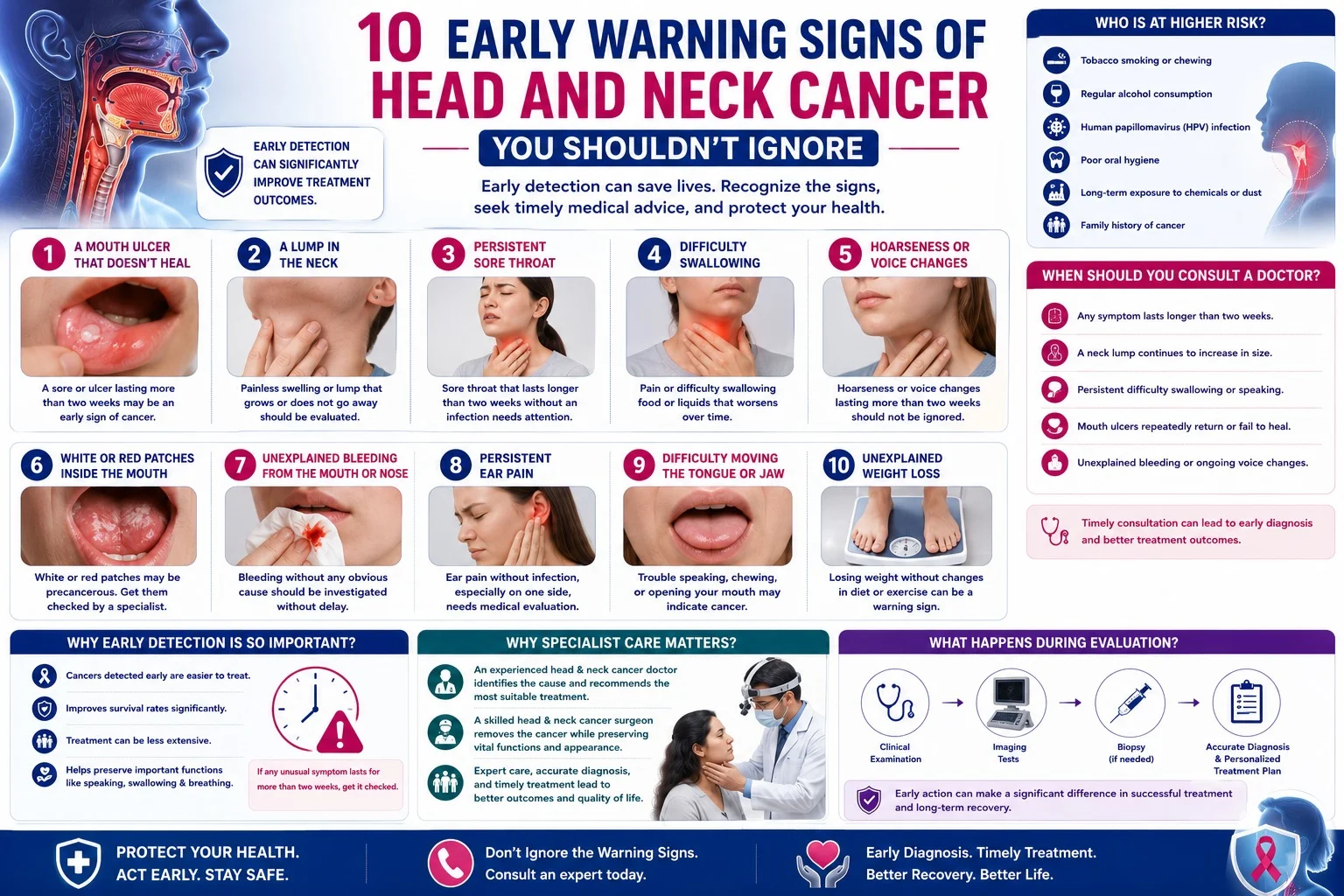
Head and neck cancer often develops gradually, and its early symptoms can easily be mistaken for common conditions like a sore throat, mouth ulcers, or an infection. Because these warning signs are usually painless in the beginning, many people ignore them until the disease has progressed.
The good news is that early detection can significantly improve treatment outcomes. Knowing the symptoms and seeking timely medical advice can make a meaningful difference. Here are 10 early warning signs that should never be ignored.
Why Early Detection Is So Important?
Many head and neck cancers are highly treatable when diagnosed in their early stages. Delaying medical evaluation may allow the cancer to grow or spread, making treatment more complex.
If any unusual symptom lasts for more than two weeks, it is important to consult a healthcare professional rather than waiting for it to disappear on its own.
1. A Mouth Ulcer That Doesn't Heal
Occasional mouth ulcers are common, but a sore or ulcer that persists for more than two weeks should be examined. Non-healing ulcers can sometimes be an early sign of head and neck cancer, particularly when accompanied by pain or bleeding.
2. A Lump in the Neck
A painless lump or swelling in the neck may indicate enlarged lymph nodes. While infections can also cause swelling, a lump that continues to grow or does not resolve should never be ignored.
3. Persistent Sore Throat
A sore throat caused by a viral infection usually improves within a few days. However, persistent throat pain without a clear reason may require further evaluation.
4. Difficulty Swallowing
Pain or difficulty while swallowing food or liquids can occur when a tumor affects the throat or surrounding structures. This symptom should be assessed promptly, especially if it continues to worsen.
5. Hoarseness or Voice Changes
If your voice remains hoarse or changes for more than two weeks without a cold or throat infection, it is advisable to seek medical advice. Persistent voice changes can sometimes indicate cancer affecting the voice box.
6. White or Red Patches Inside the Mouth
White patches (leukoplakia) or red patches (erythroplakia) inside the mouth may represent precancerous changes. Although not every patch is cancerous, they should always be evaluated by a specialist.
7. Unexplained Bleeding from the Mouth or Nose
Bleeding that occurs without injury or another obvious cause should not be overlooked. Recurrent or unexplained bleeding may require detailed medical investigation.
8. Persistent Ear Pain
Ear pain without an ear infection can sometimes be referred to as pain from the throat or tongue. Persistent discomfort, especially on one side, should be medically assessed.
9. Difficulty Moving the Tongue or Jaw
If speaking, chewing, or opening your mouth becomes difficult, it may indicate involvement of nearby muscles or tissues. Early evaluation can help identify the underlying cause.
10. Unexplained Weight Loss
Losing weight without changes in diet or physical activity may be associated with several medical conditions, including cancer. This symptom should always be discussed with a doctor, particularly when combined with other warning signs.
Who Is at Higher Risk?
Although anyone can develop head and neck cancer, certain factors increase the risk, including:
- Tobacco smoking or chewing
- Regular alcohol consumption
- Human papillomavirus (HPV) infection
- Poor oral hygiene
- Long-term exposure to certain chemicals or dust
- Family history of cancer
Reducing these risk factors and attending regular health check-ups can support early detection.
When Should You Consult a Doctor?
You should seek medical evaluation if:
- Any symptom lasts longer than two weeks.
- A neck lump continues to increase in size.
- You experience persistent difficulty swallowing or speaking.
- Mouth ulcers repeatedly return or fail to heal.
- There is unexplained bleeding or ongoing voice changes.
Consulting an experienced head and neck cancer doctor allows for a thorough examination and, if required, further investigations such as imaging or a biopsy.
Why Specialist Care Matters?
Diagnosing head and neck cancer requires careful clinical assessment and appropriate investigations. An experienced head and neck cancer doctor can identify the cause of persistent symptoms and recommend the most suitable treatment plan.
If surgery becomes necessary, a skilled head and neck cancer surgeon focuses on removing the cancer while preserving important functions such as speech, swallowing, and appearance whenever possible.
Protect Your Health by Acting Early
Many early symptoms of head and neck cancer resemble common everyday illnesses, but ignoring them can delay diagnosis and treatment. Paying attention to persistent changes in your mouth, throat, or neck and seeking timely medical care offers the best chance of successful treatment.
Early action not only improves treatment outcomes but also helps preserve quality of life.
Don't Ignore the Warning Signs
If you or a loved one experiences any of these symptoms, schedule a medical evaluation without delay. Early diagnosis by an experienced specialist can lead to timely treatment, better recovery, and improved long-term outcomes.