What Are the Treatment Options for Head & Neck Cancer?
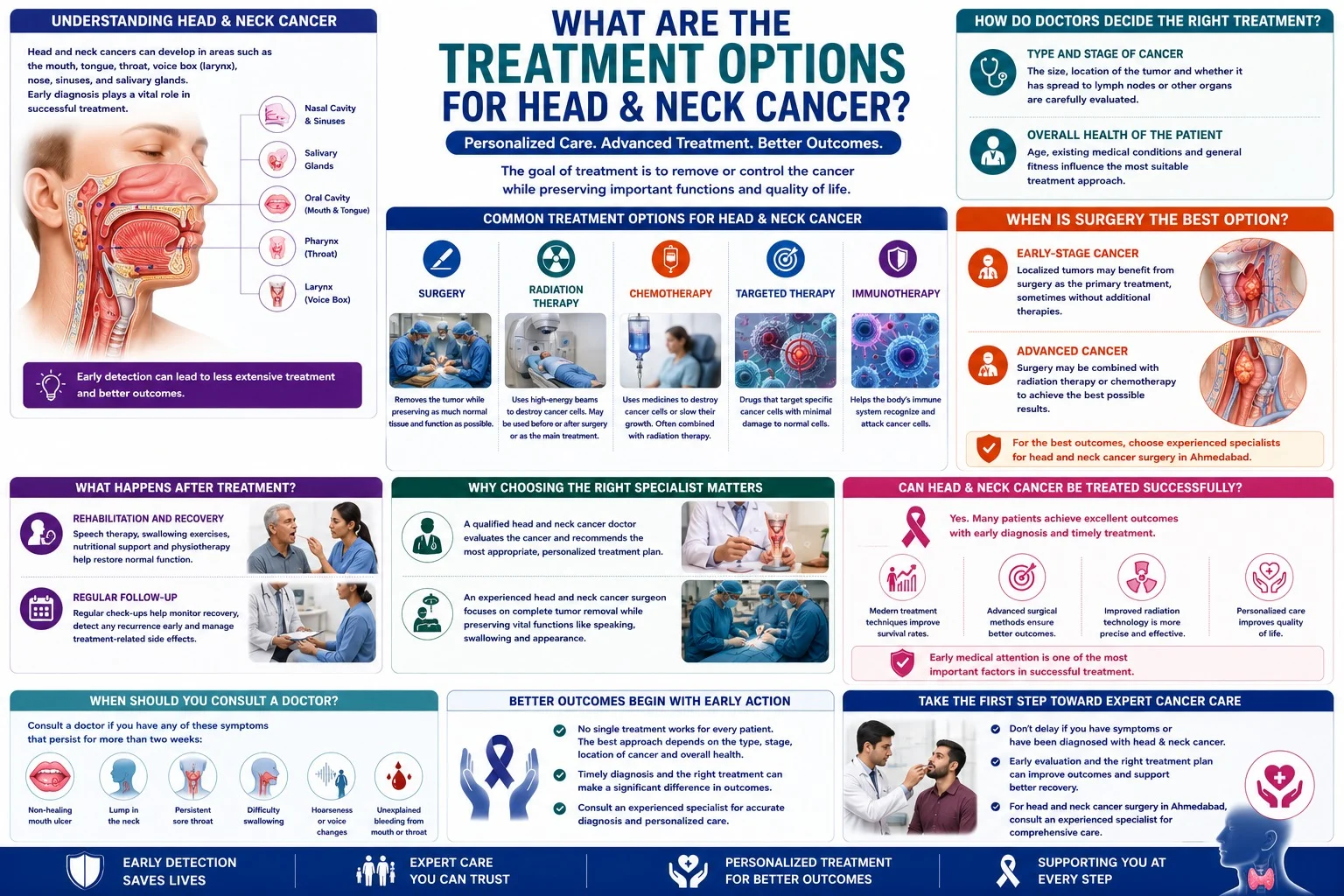
A diagnosis of head and neck cancer can feel overwhelming, and one of the first questions patients often ask is, “What are my treatment options?” The good news is that advances in cancer care have made treatment more effective than ever before. Today, doctors can choose from several approaches based on the type, stage, and location of the cancer, as well as the patient’s overall health.
The goal of treatment is not only to remove or control the cancer but also to preserve important functions such as speaking, swallowing, and breathing whenever possible.
Understanding Head & Neck Cancer
Head and neck cancer is a group of cancers that develop in areas such as the mouth, tongue, throat, voice box (larynx), nose, sinuses, and salivary glands. Early diagnosis plays a vital role because cancers detected at an early stage are often easier to treat and may require less extensive procedures.
How Do Doctors Decide the Right Treatment?
Every patient receives a personalized treatment plan based on several important factors.
Type and Stage of Cancer
The size of the tumor, its exact location, and whether it has spread to nearby lymph nodes or other organs are carefully evaluated before treatment begins.
Overall Health of the Patient
Age, existing medical conditions, and general fitness also influence which treatment approach is most suitable.
Common Treatment Options for Head & Neck Cancer
Several treatment methods may be used alone or in combination.
Surgery
Surgery is one of the most common treatments, especially when the cancer is detected early. The aim is to remove the tumor while preserving as much normal tissue and function as possible.
Radiation Therapy
Radiation therapy uses high-energy beams to destroy cancer cells. It may be used after surgery to reduce the risk of recurrence or as the primary treatment for selected cases.
Chemotherapy
Chemotherapy uses medicines to destroy cancer cells or slow their growth. It is often combined with radiation therapy for advanced cancers.
Targeted Therapy and Immunotherapy
For certain patients, targeted therapy or immunotherapy may be recommended. These newer treatments work differently from chemotherapy and can be beneficial for selected types of cancer.
When Is Surgery the Best Treatment Option?
Surgery is often recommended when the tumor can be safely removed and offers the best chance of controlling the disease.
Early-Stage Cancer
Patients with localized tumors may benefit from surgery as the primary treatment, sometimes without the need for additional therapies.
Advanced Cancer
In more advanced cases, surgery may be combined with radiation therapy or chemotherapy to achieve the best possible results.
If surgery is recommended, choosing experienced specialists for head and neck cancer surgery in Ahmedabad can help ensure accurate treatment planning, advanced surgical techniques, and better functional outcomes.
What Happens After Treatment?
Recovery is an important part of the treatment journey and varies depending on the type of therapy received.
Rehabilitation and Recovery
Some patients may need speech therapy, swallowing exercises, nutritional guidance, or physiotherapy to regain normal function after treatment.
Regular Follow-Up
Scheduled follow-up visits help doctors monitor recovery, detect any recurrence early, and address treatment-related side effects promptly.
Why Choosing the Right Specialist Matters
Successful treatment requires the expertise of experienced professionals working together.
A qualified head and neck cancer doctor evaluates the cancer thoroughly and recommends the most appropriate treatment plan based on the patient’s individual condition.
If surgery is needed, an experienced head and neck cancer surgeon focuses on complete tumor removal while preserving vital structures involved in speaking, swallowing, and appearance whenever possible.
Can Head & Neck Cancer Be Treated Successfully?
Yes. Many patients achieve excellent outcomes when the disease is diagnosed early and treated promptly.
Modern treatment techniques, improved surgical methods, advanced radiation technology, and personalized treatment planning have significantly improved survival rates and quality of life for many patients.
Early medical attention remains one of the most important factors in successful treatment.
When Should You Consult a Doctor?
You should seek medical evaluation if you notice any of the following symptoms that persist for more than two weeks:
- A non-healing mouth ulcer
- A lump in the neck
- Persistent sore throat
- Difficulty swallowing
- Hoarseness or voice changes
- Unexplained bleeding from the mouth or throat
Early consultation allows doctors to diagnose the condition sooner and begin appropriate treatment without unnecessary delays.
Better Outcomes Begin with Early Action
There is no single treatment that works for every patient with head and neck cancer. The best approach depends on the type, stage, and location of the disease, as well as the patient’s overall health. Whether treatment involves surgery, radiation therapy, chemotherapy, or a combination of these, timely medical care can make a significant difference in outcomes.
Consulting an experienced head and neck cancer doctor ensures an accurate diagnosis and personalized treatment plan. If surgery is advised, a skilled head and neck cancer surgeon can help provide the most appropriate care while focusing on both cancer control and quality of life.
Take the First Step Toward Expert Cancer Care
If you or a loved one has symptoms of head and neck cancer or has recently been diagnosed, don’t delay seeking expert medical advice. Early evaluation and the right treatment plan can improve outcomes and support a better recovery. If head and neck cancer surgery in Ahmedabad is recommended, consulting an experienced specialist can help you receive comprehensive care tailored to your individual needs.