
Nerve Monitoring in Thyroid Surgery- Why It Matters
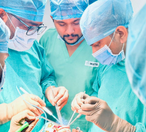
Nerve Monitoring in Thyroid Surgery- Why It Matters Voice outcomes are a major quality-of-life issue after thyroid surgery, and protecting the recurrent laryngeal nerve is a core surgical priority. IONM provides real-time functional feedback that can help identify nerves in complex anatomy and guide safer decisions (including staged surgery after loss of signal), although it does not replace surgical expertise or guarantee zero voice change. Most patients come for thyroid surgery focused on cure and safety and rightly so. But patients also care deeply about voice: the ability to speak clearly, project, swallow comfortably, and avoid breathing problems. The single most important nerve related to the voice during thyroid surgery is the recurrent laryngeal nerve (RLN), which controls vocal-cord movement. When the RLN is injured, patients may experience hoarseness, breathy voice, aspiration (coughing with liquids), or rarely airway compromise. How surgeons protect the nerve (gold standard + modern adjuncts) The foundation of RLN protection is careful surgical technique and direct visual identification of the nerve considered the gold standard. Intraoperative nerve monitoring (IONM) was developed as an adjunct to support identification and provide functional feedback via electromyography (EMG), typically using a specialised endotracheal tube with electrodes. Importantly, IONM assists the surgeon; it does not “do the surgery” and does not replace skill or anatomy knowledge. What is IONM? IONM is a system that allows the surgical team to stimulate a nerve and receive an EMG response, indicating that the nerve is conducting signals to the laryngeal muscles. In practical terms, it helps the surgeon: Locate the RLN when anatomy is distorted Confirm function before and after critical steps Detect changes that may signal traction or injury risk There are two broad styles: Intermittent IONM: the nerve is checked at key steps Continuous IONM: ongoing monitoring via vagus nerve stimulation When nerve monitoring is most useful IONM can be considered in many thyroid operations, but it is most compelling in higher-risk scenarios where anatomy is challenging or consequences are greater, such as: Re-operative thyroid or parathyroid surgery Large goitres or retrosternal extension Thyroid cancer with suspected invasion near the RLN Bilateral surgery planned (total thyroidectomy) Anatomic variants or complex nodal dissections A key safety concept: loss of signal and staged surgery One of the most patient-relevant contributions of IONM is decision support when the signal drops or is lost on one side during planned bilateral surgery. In such cases, surgeons may consider staging the surgery completing one side and postponing the other to reduce the risk of bilateral vocal-cord paralysis requiring urgent airway management. Does nerve monitoring reduce nerve injury? IONM is widely adopted and may be associated with a small protective effect in real-world settings. Evidence suggests that any reduction in nerve-injury risk is modest overall and most relevant in selected higher-risk situations. The most honest conclusion: IONM is best viewed as a risk-reduction tool (especially in complex cases), not a guarantee. Pre-operative voice assessment: why it matters Some patients may have pre-existing vocal-cord weakness, sometimes without obvious symptoms. In higher-risk cases, pre-operative voice assessment may be recommended to establish a baseline and help interpret any postoperative changes. Common FAQs 1. Will nerve monitoring guarantee my voice will be normal? No. Voice change can occur even without nerve injury, and nerve injury can still occur despite monitoring. The purpose is to reduce risk and support safer decisions. 2. Is nerve monitoring necessary in every thyroid surgery? Not always. Many routine low-risk thyroid operations are safely performed with meticulous technique. Monitoring becomes most valuable when risk is higher. 3. Does monitoring replace surgeon experience? No. It is an adjunct. Visual identification and safe dissection remain fundamental. 4. What happens if the signal is lost during surgery? The surgeon may consider staging the surgery to reduce risk of bilateral vocal-cord paralysis. 5. Should I have a pre-operative vocal cord check? It may be recommended in selected cases, especially in re-operative surgery or when there are voice symptoms. Risks and Benefits Benefits: improved nerve identification and functional feedback, safer decision-making in complex cases, support for staged surgery, and possible reduction in nerve injury in selected patients. Limitations: added equipment and cost, possible false alarms, does not eliminate risk, and depends on correct setup and interpretation. Conclusion Thyroid surgery is usually safe, but protecting the voice nerve is a high priority especially in cancer, redo surgery, large goitres, or planned bilateral procedures. If you’ve been advised thyroid surgery and want a voice-focused, safety-first plan, a structured consultation can help you understand your personalised risk and the safest surgical approach.