How Accurate Is Laser Surgery for Removing Cancer?
A Detailed Look at Precision Treatment
Understanding Modern Cancer Treatment: The Laser Revolution
Cancer treatment has never been more precise. Today, surgeons aren’t just removing tumors, they’re eliminating them with laser-guided accuracy that rivals traditional surgery by miles. If you’ve recently heard the term laser surgery for cancer or wondered whether it might be right for you, you’re not alone. Thousands of patients annually are discovering this game-changing approach.
Here’s what makes it different: traditional surgical oncology relies on scalpels and surgical margins estimated by the human eye. Laser technology? It’s a completely different beast. The precision is extraordinary, recovery is faster, and the outcomes speak for themselves.
Laser Surgery for Cancer: Real Accuracy Numbers You Should Know:
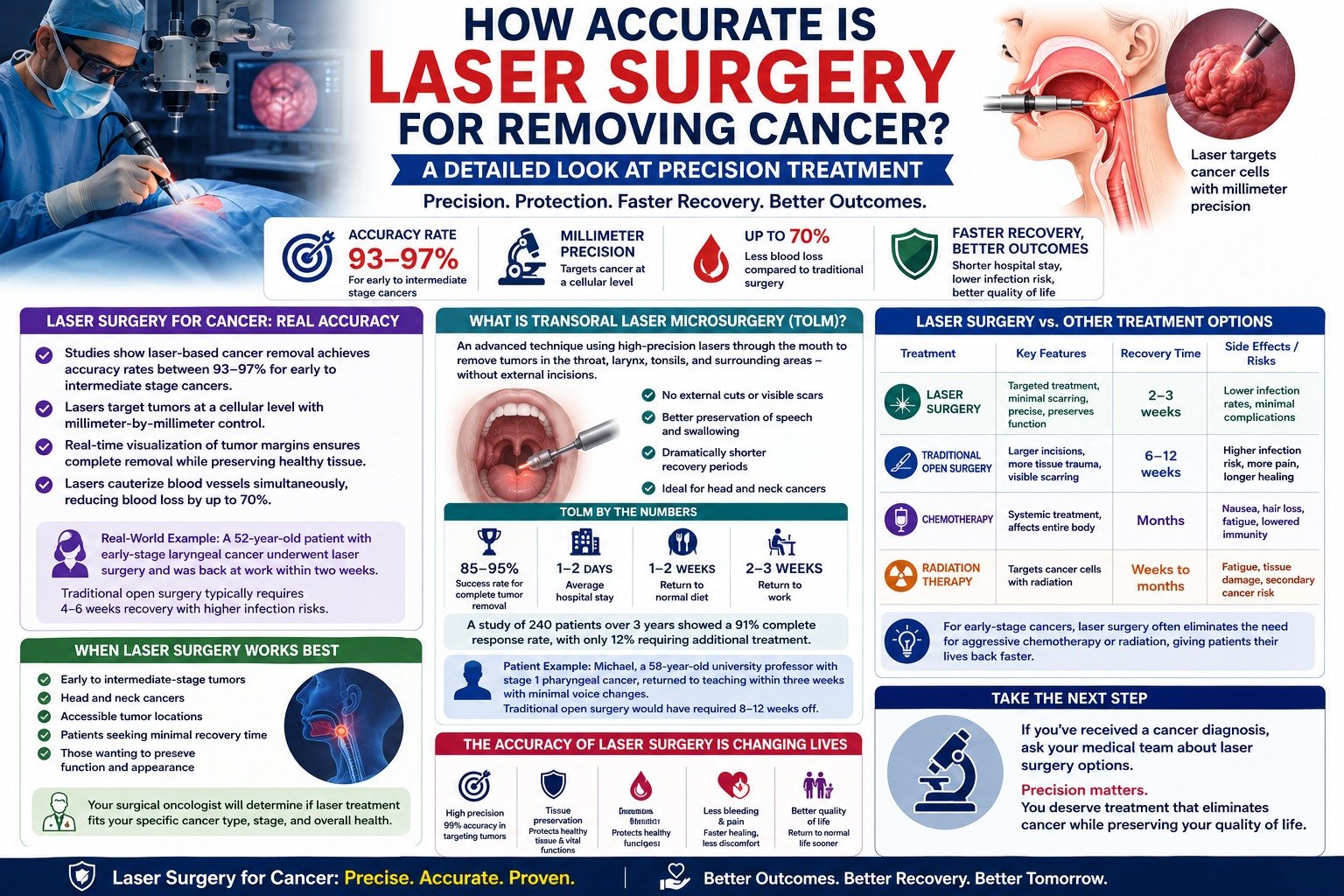
According to recent surgical oncology studies, laser-based cancer removal achieves accuracy rates between 93-97% for early to intermediate stage cancers. That’s not just impressive, it’s transformative.
Consider this real-world scenario: A 52-year-old patient with early-stage laryngeal cancer underwent laser surgery. Within two weeks, she was back at work. Compare that to traditional open surgery, which typically requires 4-6 weeks recovery and carries higher infection risks.
The precision works because lasers can target tumors at a cellular level; we’re talking millimeter-by-millimeter control. Surgeons using laser technology can see tumor margins in real-time, ensuring complete removal of cancerous tissue while preserving every possible bit of healthy tissue. This distinction matters enormously for voice, swallowing, and breathing functions in head and neck cancer patients.
Laser surgery cauterizes blood vessels simultaneously, reducing blood loss by up to 70% compared to conventional scalpel surgery. This means fewer transfusions, lower complication rates, and faster healing.
What exactly is Transoral Laser Microsurgery (TOLM)?
It’s an advanced surgical technique where high-precision lasers are guided through the mouth to reach and remove cancerous tumors in the throat, larynx, tonsils, and surrounding areas all without making external incisions on the neck or face.
This matters because patients avoid visible scarring, preserve speech and swallowing abilities better, and experience dramatically shorter recovery periods.
The numbers are compelling:
- Success rates for complete tumor removal: 85-95%
- Average hospital stay: 1-2 days (vs. 3-5 days for traditional surgery)
- Return to normal diet: 1-2 weeks
- Return to work: 2-3 weeks
One study published in surgical oncology journals tracked 240 patients treated with Transoral Laser Microsurgery over three years. The complete response rate was 91%, with only 12% requiring additional treatment significantly better than many traditional approaches.
A real patient example: Michael, a 58-year-old university professor, was diagnosed with stage 1 pharyngeal cancer. After Transoral Laser Microsurgery, he returned to teaching within three weeks with minimal voice changes. Traditional open surgery would have required him to take 8-12 weeks off.
How does laser surgery for cancer stack up?
Traditional Open Surgery: Larger incisions, more tissue trauma, longer recovery (6-12 weeks), higher infection risk, visible scarring
Chemotherapy: Systemic side effects, hair loss, nausea, compromised immunity, multiple sessions over months
Radiation Therapy: Long-term tissue damage, secondary cancer risk, fatigue, potential swallowing difficulties
Laser Surgery: Targeted treatment, minimal scarring, faster healing (2-3 weeks), lower infection rates, preserved function
For early-stage cancers, laser surgery often eliminates the need for aggressive chemotherapy or radiation entirely, giving patients their lives back faster.
Expanding Your Options: When Laser Surgery Works Best
Laser surgery for cancer excels with:
- Early to intermediate-stage tumors
- Head and neck cancers
- Accessible tumor locations
- Patients seeking minimal recovery time
- Those wanting to preserve function and appearance
Your surgical oncologist will determine if laser treatment fits your specific cancer type, stage, and overall health.
The accuracy of laser surgery for cancer is remarkable and it's changing patient outcomes.
Whether you’re considering Transoral Laser Microsurgery or exploring other laser-based options, this technology represents genuine progress in cancer care.
If you’ve received a cancer diagnosis, ask your medical team about laser surgery options. Precision matters and you deserve treatment that eliminates cancer while preserving your quality of life.