Proton Therapy in Oropharyngeal Cancer : A Breakthrough, But Not a Blanket Replacement
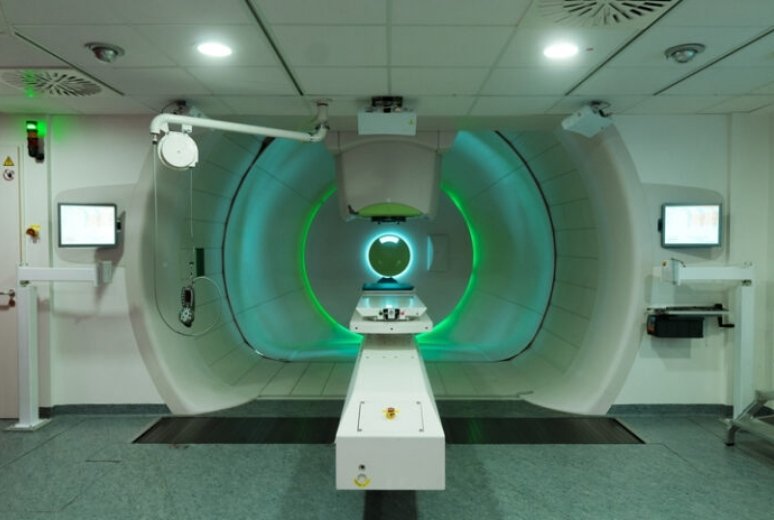
A recently published large randomized phase III dataset (MD Anderson led, multicenter) comparing IMPT (protons) vs IMRT (photons) in oropharyngeal cancer is being positioned as “practice-changing.” The reported highlights include improved 5-year overall survival and fewer severe toxicities like dysphagia, xerostomia, feeding-tube dependence and even hematologic toxicities.
From a Head & Neck surgical oncologist’s perspective, this matters because contemporary oropharyngeal cancer care is no longer defined by cure alone. Dysphagia, xerostomia, feeding-tube dependence, weight loss, and recurrent hospitalizations shape long-term survivorship, and patient dignity.
Why protons make biological sense
By reducing exit dose and overall integral dose, proton therapy can:
- Spare salivary glands and pharyngeal constrictors
- Reduce severe mucositis, dysphagia, and feeding-tube dependence
- Lower hematologic toxicity in selected settings
These benefits are real, but context dependent.
India has limited proton capacity and substantial costs (~₹40 lakh in private centres, ~₹20 lakh in select government facilities).
Can proton therapy become routine today?
Not universally only selectively and strategically.
High quality IMRT remains an excellent standard for the majority of patients. The correct framing is IMRT for most, protons for the right few ,not IMRT versus protons.
Where protons add the most value in India
• Skull base and sinonasal tumors
• Re-irradiation cases
• Pediatric and young adult patients
• Selected oropharyngeal cancers with a clear dosimetry advantage.
Proton therapy should evolve as a national precision resource, guided by:
- MDT-driven patient selection
- Comparative IMRT vs IMPT planning
- Indian outcome registries and rational reimbursement models
The question is no longer whether proton therapy works.
The question is where, for whom, and at what cost it should be integrated into routine head & neck cancer care.
The next “standard of care” is not a machine,it is a decision pathway.
Innovation must be balanced with realism, access, and patient value.