
Not Every Mouth Ulcer Is Harmless -
Here Is When It Becomes a Red Flag
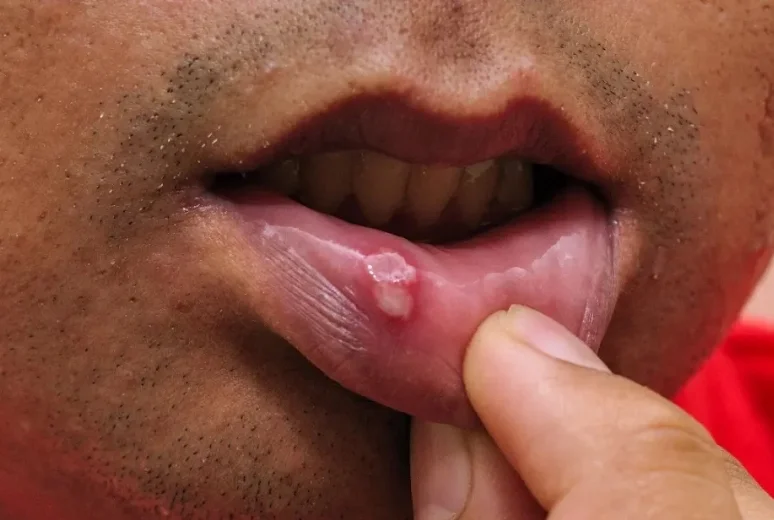
Most of us have had a mouth ulcer at some point. A small sore appears, it stings for a few days, and then it is gone. We barely think about it. But what happens when it does not go away? What happens when it grows larger, bleeds without reason, or sits in the same spot for three weeks without showing any sign of healing? That is when a mouth ulcer stops being a minor inconvenience and starts being a message worth listening to. This blog is about knowing the difference because catching that difference early can change everything.
Most Mouth Ulcers Are Harmless - But Not All of Them
Let us be clear from the start: the vast majority of mouth ulcers are benign. They are caused by minor trauma, stress, vitamin deficiencies, acidic foods, or hormonal changes. They heal on their own within seven to ten days and leave no trace behind. There is no cause for alarm with these.
But a small percentage of mouth ulcers are not what they appear to be. They look similar on the surface a sore, a raw patch, some discomfort but they behave differently. They do not follow the normal healing pattern. And in some cases, they are the earliest visible sign of oral cancer.
How a Normal Mouth Ulcer Behaves and Heals?
A typical ulcer is round or oval, has a white or yellowish centre, and is surrounded by a slightly red border. It is painful to touch, worsens briefly when eating acidic or spicy food, and begins improving within five to seven days. By the end of the second week, it should be gone.
The Moment It Stops Being Normal The 2-Week Rule
If a mouth ulcer has not healed within two weeks, the reason needs to be investigated. This is not a guideline it is a clinical boundary. Beyond two weeks, the ulcer is either being caused by something that needs treatment, or it is something more serious that needs to be ruled out. Either way, it needs professional attention.
What Your Mouth Is Actually Trying to Tell You?
The mouth is remarkably good at showing early signs of systemic problems if you know what to look for. The challenge is that early oral cancer symptoms are easy to dismiss precisely because they resemble ordinary, harmless conditions.
Early Oral Cancer Symptoms That Look Exactly Like a Simple Ulcer
The early oral cancer symptoms that most frequently get ignored include a sore or ulcer that does not heal, a red or white patch inside the mouth, unexplained bleeding from the gum or cheek lining, a lump or thickening in the soft tissue, and persistent pain or tenderness in the mouth without an obvious cause. None of these are dramatic. All of them are easy to explain away. And that is exactly why oral cancer is so often found late.
The Specific Signs That Separate a Harmless Sore from Something Serious
Pay attention when an ulcer is painless counterintuitively, painless ulcers are more concerning than painful ones. Pay attention when the edges feel raised or rolled. Pay attention when the base of the ulcer looks uneven or granular rather than smooth. And pay close attention when the ulcer is accompanied by a lump in the neck, difficulty swallowing, or a feeling that something is stuck in the throat. These combinations are not normal. They are signals.
Tongue Ulcers - Why This Location Deserves Extra Attention
Not all locations inside the mouth carry equal risk. The tongue particularly its side edges and the area underneath is one of the most common sites for oral cancer to develop, and tongue ulcer cancer signs are among the most frequently delayed diagnoses.
Why Tongue Ulcers Are Harder to Self-Assess
The sides and underside of the tongue are difficult to examine in a mirror. Many patients are entirely unaware of a lesion in these areas until it has been present for weeks or months. This is not negligence it is anatomy. Which is why any persistent soreness, roughness, or discomfort on the tongue that lasts beyond two weeks should be examined by a professional, not monitored at home.
Tongue Ulcer Cancer Signs: What to Look for and What to Feel
Tongue ulcer cancer signs that warrant urgent attention include an ulcer on the side or underside of the tongue that has been present for more than two weeks, an area of the tongue that feels harder than the surrounding tissue, a patch that is red, white, or mixed in colour and does not wipe off, and any ulcer that bleeds easily when touched or during eating. If you notice any of these, do not wait for it to resolve on its own.
The Risk Factors That Make a Persistent Mouth Ulcer More Concerning
Not everyone who gets a mouth ulcer is at equal risk. Certain habits and backgrounds raise the stakes considerably.
Tobacco, Pan Masala, and Alcohol The Combination That Raises the Stakes
In India, the use of tobacco in any form smoking, chewing, gutka, pan masala is one of the strongest known risk factors for oral cancer. Alcohol use compounds this risk significantly. For anyone who uses these substances regularly and develops a persistent mouth ulcer, the threshold for seeking specialist assessment should be much lower not two weeks, but immediately if the ulcer is unusual in any way.
Why People in Their 40s and 50s Should Be Especially Alert?
While oral cancer can occur at any age, it is most commonly diagnosed in people between 40 and 60 years of age. Combined with a history of tobacco or alcohol use, age becomes a relevant factor in how seriously a persistent ulcer should be taken.
What Happens When a Persistent Mouth Ulcer Is Actually Cancer?
The word “cancer” in connection with a mouth ulcer is frightening. But the reality of what happens when it is caught early vs late is one of the most important facts in all of oncology.
How Oral Cancer Typically Begins and Why It Is So Often Missed Early?
A persistent mouth ulcer cancer typically begins as a small, painless lesion that patients and even general practitioners can initially mistake for a common sore. Because it does not hurt or hurts only mildly it gets treated with over-the-counter gels, mouthwashes, and home remedies for weeks and sometimes months before a biopsy is considered. By the time a diagnosis is made, the cancer has often progressed beyond its earliest stage.
The Difference Between Detecting It at Stage 1 Versus Stage 3
This is the number that matters most. Oral cancer detected at Stage 1 has a survival rate above 80 percent. By Stage 3, that figure drops dramatically and the treatment required becomes significantly more extensive, involving larger surgeries, radiation, and longer recovery. The ulcer that gets checked at two weeks and turns out to be early-stage cancer is a completely different clinical situation from the one that gets ignored for six months. The two-week rule exists because this difference is real and measurable.
What to Expect When You Finally See a Specialist?
Many patients delay seeking help because they are unsure what a consultation involves or because they are afraid of what they might be told. Understanding the process removes both barriers.
What a Mouth Ulcer Specialist Examines During Your First Visit?
A specialist will examine the ulcer visually and by touch assessing its size, borders, texture, and the condition of the surrounding tissue. They will feel the lymph nodes in the neck. They will ask about duration, any change in size, associated symptoms, and relevant habits. This examination takes minutes and is completely painless.
When a Biopsy Is Recommended and Why It Is Not Something to Fear?
If the ulcer appears suspicious, a biopsy will be recommended a small tissue sample taken from the ulcer under local anaesthesia. It is a minor procedure, not a major one. The biopsy result is the only definitive way to confirm or rule out malignancy, and getting that answer quickly is always better than waiting and wondering.
What to Look for in a Mouth Ulcer Specialist ?
When choosing a mouth ulcer specialist for an ulcer that concerns you, look for a head and neck surgical oncologist or an oral oncologist with specific experience in evaluating suspicious oral lesions. General dentists and physicians can make a referral, but for a persistent ulcer especially one accompanied by any of the warning signs described a specialist assessment is the appropriate level of care.
The One Appointment That Could Change Everything
Early oral cancer, caught before it spreads, is highly treatable. The treatment is less extensive, the recovery is shorter, and the outcomes are significantly better. That outcome begins with one appointment made before the two weeks become two months.
Two Weeks Is the Line - Do Not Let It Become Two Months
A mouth ulcer that heals in a week is almost certainly nothing. A mouth ulcer that is still there at two weeks deserves professional attention. A mouth ulcer that has been present for two months without investigation is a delayed diagnosis waiting to happen. The difference between these three situations is not the ulcer it is the decision made about it. Know the signs. Trust the two-week rule. And if something feels wrong, act on it.